All good things must come to an end

Today is the last day of our holiday in Orkney, so we have been taking it easy and getting ready for a 9:00 ferry tomorrow morning to take us back home. We will be staying overnight in Doune and expect to reach home in the early evening on Sunday.

The cottage we have been staying in was rebuilt as an Eco-cottage a few years ago (2008 if the visitors book is anything to go by). It is cosy and suitable for two, with just curtains separating the bedroom from the rest of the cottage, a wet room with a really good shower (and a window cleaner’s squeegee to dry the floor, which it does very well) a lounge and kitchen diner all in one. The roof is turfed, which as well as being good insulation dampens the sound of rain (pardon the pun!). Here are a couple of photos of the cottage and of the view.

Untitled

Untitled

Untitled

So the key questions I ask myself at the end of a holiday are have I enjoyed it, would I recommend it to anybody else and would I come here again. The answer to all three is a very clear and resounding “yes”. Although we have seen most of the main sights (or do I mean sites?) here there is still more to explore. We have only touched on the joys of the other islands that make up Orkney and as far as bird watching goes, we have done little to go out of our way to find wildlife (except that Pearl was desperate to see a whale or two and some Dolphins – we didn’t see any!). We have concluded that this is not the best time of year to come to Orkney for the wildlife and that maybe when we come back it is more likely to be in June.

What else can I say about Orkney other than what I have already written? The people are exceptionally friendly. Without exception! There is no crime here – the owner of the cottage even told us that he doesn’t know where the keys for his house are and that he only knows where his car keys are because they are in the ignition! This comes from the island community nature and the fact that anything stolen will either be found here or there are very few ways to get things off the island. Even drivers don’t speed. I only recall one example of a speeding motorist in two weeks – and it wasn’t me!

So it is with sadness that our holiday comes to an end, but we have learnt and experienced so much. As there is a lot of travelling to do over the next couple of days and we then need to recover and prepare for work on Tuesday, this will probably be my last blog on our 2013 holiday.

Orkneyinga Saga

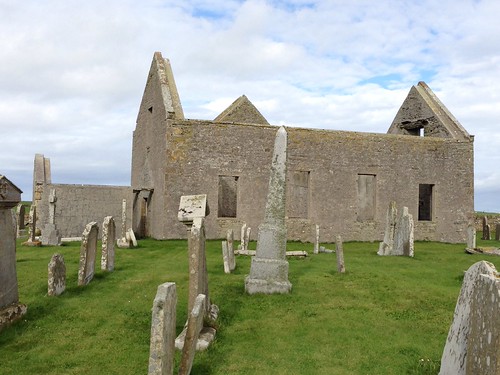
It was the Icelandic people who started the practice of recording their history in ‘Sagas’, which are slightly fictionalised versions of real events, intended to be read to families who enjoyed hearing stories of their heroes and their ancestors. It was a stylised way of writing which includes the ancestry and relationships of each character as they are introduced into each story (or Saga). The set of Orkney Island Sagas was collected in the thirteenth century by an unknown Icelander. Of course up until this point the Orkney and Icelandic people spoke the same language and had much in common, with their Viking heritage; as the Orkney people had more to do with Scotland and the Icelanders to Norway, this bond was broken. The Orkneyinga Saga tells the stories of the Earls of Orkney who seemed to spend most of their time killing each other (although that might have simply been the highlights of the stories!). The Heritage Centre is built next to the remains of a round church which figures in the Saga; the church is surrounded by a very modern and neat cemetery, as all Orkney cemeteries are.

Untitled

Untitled

Untitled

Untitled

We spent the afternoon in Stromness, this time visiting the local museum, which has a special display right now about John Rae, the Arctic explorer from Orkney who discovered the North West Passage from the Atlantic Ocean to the Pacific via the Arctic circle and the north of Canada. He was never given recognition in his own time due to Victorian attitudes to his practice of learning and adopting hunting and survival skills from the Inuit, as well as his controversial (but now proven) verdict on the failed Franklin expedition to locate the North West Passage. He was born 200 years ago this weekend.

A sunny day (at last)

Wednesday dawned fine and bright. Then it clouded over. There is a saying in Orkney that there is no such thing as bad weather … you just have to wait five minutes and it will change. This is equally true of sunny weather as it is of rain, so as the day went on, we alternated from lovely sunshine and blue skies to dark grey clouds floating over. Still, at least it didn’t rain.

We’ve seen quit a lot of Neolithic Orkney, so today we progressed 2,000 years, visiting the 3,000 year old remains of the Broch of Gurness. This amazing Iron Age village (comprising one high class dwelling surrounded by a number of smaller houses. The site has since been used by Orcadian Picts as late as the fifth century. It was discovered in 1959 accidentally when an artist lost a leg of his stool whilst sitting on the top of a mound of grass. The ruins look out over Eynhallow Sound to the island of Eynhallow (Holy Island) where there was once a monastery.

Untitled

Untitled

Untitled

Untitled

Untitled

After lunch we moved on to explore a couple of the sandy beaches on the east side of the island, visiting St Peter’s Pool and Bay, but here spending more time on the un-named beach on the south side of the peninsular.

Untitled

Untitled

From there we moved to Newark Bay, which was recommended in one of the guide books, where we explored rocks, watched seals and enjoyed the sunshine.

Untitled

The “mud” in the foreground of this picture is actually rock – presumably formed from mud?
Untitled

Finally, back home at the cottage (photos still to follow) we enjoyed a beautiful sunset.

Untitled

Land a-Hoy

Today we took a trip to Hoy to experience the Scapa Flow Visitor Centre at Lyness.

Scapa Flow has got an amazing nautical heritage which began back in the days of the Vikings (and probably even earlier) although better known for the impact it had on naval warfare in both the first and second world wars. The Visitor Centre has more displays than you would hope to be able to read through; in our short visit as well as seeing the main exhibition we went to a disused oil tank (to put this in context, it was large enough to be a whispering gallery and had the acoustics to match) where films were running (projected onto a white painted patch on a side of the tank).

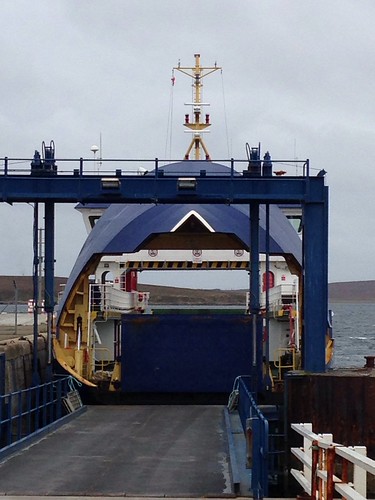
It would be wonderful to show some pictures of the views from the ferry as we went from mainland Orkney behind Flotta and to Hoy. However, we were in the passenger lounge below the car deck, with no windows (or even portholes!) so instead, here are a few pictures of the ferry!

Untitled

Untitled

Untitled

Untitled

To keep the theme of the day we are now settling down to watch David Lean’s film written by and starring Noel Coward, “In Which We Serve”!

A food report … and a surprise

So yesterday we went for a meal at The Foveran. I can’t say that it was very good. I can say that it was fantastic! North Ronaldsay (the northernmost of the Orkney Islands) has sheep that eat seaweed. Paul Roull takes the sheep and, as most of the flavour is in the fat, slow cooks them for six hours to render all the flavour off the fat and into the mutton itself. This is the best tasting sheep I have ever tasted and it literally just crumbled as you cut into it. So I can definitely recommend The Foveran as a place to eat if you are on Orkney. We are going back again on Thursday!

Today was a shopping day – but not in the traditional way. We wanted to get something permanent to remember Orkney by. So it was whilst we were at Hoxa Tapestry Gallery that I received a phone call from Pentland Ferries telling me that the ship on which we came to Orkney (MV Pentalina) would be in dry dock for emergency repairs on Friday, Saturday and Sunday this week. Saturday is our return journey! So from the car park I had to re-book passage with another ferry company (North Link Ferries) who luckily had reservations available, but it does mean that we have to be on a ferry at 09:00 rather than a more leisurely 11:50 on Saturday morning. The plus side is that we will be able to travel further home on Saturday, making the remainder of the journey on Sunday more relaxing.

Shopping continued … we bought a picture and then moved our shopping venue to Kirkwall for jewellery (although nothing was purchased).

Sorry, no pictures today; it’s been another grey and damp day and the scenic, moody pictures I took just don’t quite do it justice. The weather will brighten up again as the week progresses (I hope)!

It’s the Weekend!

Well, I can’t believe that the weekend has come around so soon. The middle weekend of our holidays are usually quiet, relaxing ones and this weekend is no different.

After a lazy Saturday morning we went to explore a couple of ring circles that were build by the Neolithic people. As any archaeologist will tell you, we don’t know exactly when, how or why they were built … the stones are large and heavy, don’t come from the immediate locality and each site (this goes for the tombs as well) all have some sort of alignment that could indicate religious or ceremonial use. One thing, though, is that to go to this much trouble to build them, they must have been important to whoever built them, local or otherwise.

The Ring of Brodgar has 36 of the original 60 stones still standing, forming a circle 105 metres in diameter, with a ditch on the outside of that. Little else is known about it, as there has been little archaeological studies, so for example, there is no indication of what was in the middle. The size means that it is difficult to do it justice in a photo without being airborne, so here are a few photos giving an idea of what it looks like.

Untitled

Untitled

Untitled

Next we moved to the Stones of Stenness. More investigation has gone into this site, which was originally about 44 metres across with a two metre deep, seven metre wide ditch cut into the bedrock. Twelve standing stones were erected in a ring inside this, with one entrance causeway and a hearth in the centre; recent excavations have uncovered slots and pits around the hearth for stone and timber structures. Of all of this, four main standing stones remain.

Untitled

It’s Sunday today and we have been to St Magnus Cathedral in Kirkwall for their (very Celtic) morning service and, as the weather is very wet and windy today (that doesn’t really sum it up properly – we are in a cloud that, despite the wind, won’t blow away!) we decided to have lunch out (back at the Orkney Brewery Visitor Centre). Tonight we will be having a meal at an “aspiring” restaurant (according to the owner of the cottage we are staying in) with one of Orkney’s top chefs (Paul Doull) – The Foveran – so we have high expectations of a good meal! Until then we are keeping cosy in our cottage (when the weather is better I’ll take some pictures of it).

Sanday … another island, another tomb (almost)

Friday we have taken a trip out to one of the other islands. We had no real plan, other than making sure we knew when the ferries were due to run, we had contacted a local bus company to pick us up from the ferry and drop us somewhere.

So we headed to Sanday and arrived at Kettletoft where the local hotel provided a hearty meal (definitely not fine dining) and we then headed out to walk to Quoyness Cairn, which turned out to be a good two hour walk each way. If you read my blog from yesterday you will understand what I mean when I say that this is a ‘Maeshowe’-type tomb! On the way we walked around a sandy bay as the tide was going out, past the remains of an old Kirk (with, as seems typical on Orkney, a large well maintained cemetry). As we got near to the Cairn the footpath became overgrown and the weather which had started the day bright and sunny became worse and heavy rain was approaching. So we called that a day and walked back to Kettletoft where we had arranged for the bus to pick us up again.

I’m typing this in the other pub here while we recover from about a ten mile walk, knowing that because of “industrial action” on the ferries, our return journey will be via Stronsay and take two hours twenty minutes instead of the one hour forty-five this morning.

Untitled

Untitled

Untitled

Another Neolithic tomb … and an antidote

Today we visited yet another Neolithic tomb! Now don’t get the idea that we are getting “tombed out” – there really are some different types, styles, entry methods into the burial chambers, guided tour and presentations. Maeshowe remains one of the best preserved architectural monuments of prehistory and is of the type of tomb known as (wait for it) ‘Maeshowe’-type, which are only found on Orkney. The two that we visited yesterday were both of the ‘Orkney-Cromarty’ type, or ‘Stalled Cairns’ which are found more widely across Scotland. The former have a long entrance passage into a central rectangular chamber from which other cells have been built into the walls; the latter usually have a shorter passage leading to a rectangular chamber sub-divided by flagstones, giving the impression of animal stalls (hence the name).

Because if the alignment of the entrance passage, the light of the setting sun shines into Maeshowe on the midwinter solstice (21st December) which is filmed in time-elapsed photography and available to watch in pretty much real time at the Maeshowe Winter Solstice website, which also shows the last good sunset from the previous winter (they film it for a couple of months every year). No photos from inside, I’m afraid – it’s not allowed; but a few from outside:

Untitled

Untitled

Untitled

After this we needed lunch and went (for more reasons than just lunch) to the Orkney Brewery Visitor Centre, which really surprised us with the quality of food in the restaurant as well as the quantity of samples provided after the short guided tour of the brewery. This is well worth visiting just for a meal; friendly, clean, efficient, wonderful beer (other drinks are available) and excellent food.

Neolithic tombs (and a chapel)

On wednesday we took a trip down to South Ronaldsay, stopping on the way for a look at the amazing Italian Chapel which was built by Italian prisoners of war during the Second World War out of two Nissan huts. Apologies that the pictures are a little dull – it was a bit cloudy!

Untitled

Untitled

Untitled

Once on South Ronaldsay we headed for Skerries Bistro of a lovely lunch (recommended) and the a tour round their “private” tomb, the Tomb of the Otters where we had a talk and a guided tour. The tomb is still being investigated with carbon-dating and DNA testing due this year but they have been able to leave much of the tomb untouched, so when you are in it, you are still surrounded by 5,000 year old bones. It is probably the first time that I have held human bones!

From there we went to the more tourist oriented Tomb of the Eagles where we had more presentations and a wonderful cliff-top walk (in high wind and rain) to see the remains of a Bronze Age house and another Neolithic tomb, this time fully emptied and capped with concrete – but still having a novel way of gaining entry! From the cliffs on the way back we could see seals swimming about in the water below.

Untitled

Untitled

Untitled

Untitled

Kirkwall

As we continue our tour of Orkney, we spent a day in the capital, Kirkwall, taking in St Magnus Cathedral (his remains are here, built into one of the pillars), the Orkney Wireless Museum and the Earl’s and Bishop’s Palaces. If you find yourself in Kirkwall looking for an interesting and tasty lunch (although they are open from 09:00 to 20:00 every day) we can recommend the Judith Glue Real Food Cafe (we had a Smorgasbord for two, sampling lots of local produce).

Untitled

Untitled

Untitled

Untitled