
Yesterday we were in Bethlehem which we needed a coach to ferry us round (what happened to “O Little Town of Bethlehem”?); today we are on a walking tour of Jerusalem. Or so I thought; the coach did need to ferry us between some of the main areas of our visit, but there was still quite a lot of walking.
We started by walking down the Mount of Olives, stopping near the top at the Church of the Our Father, a 18th century church standing where Queen Helena had a church built in the 4th century. Even though the other gospels place the teaching of the Lord’s Prayer in the Galilean ministry, Luke associates it with Jesus’ time in and around Jerusalem. We said the Lord’s Prayer in the spot that tradition says it was taught to the disciples.
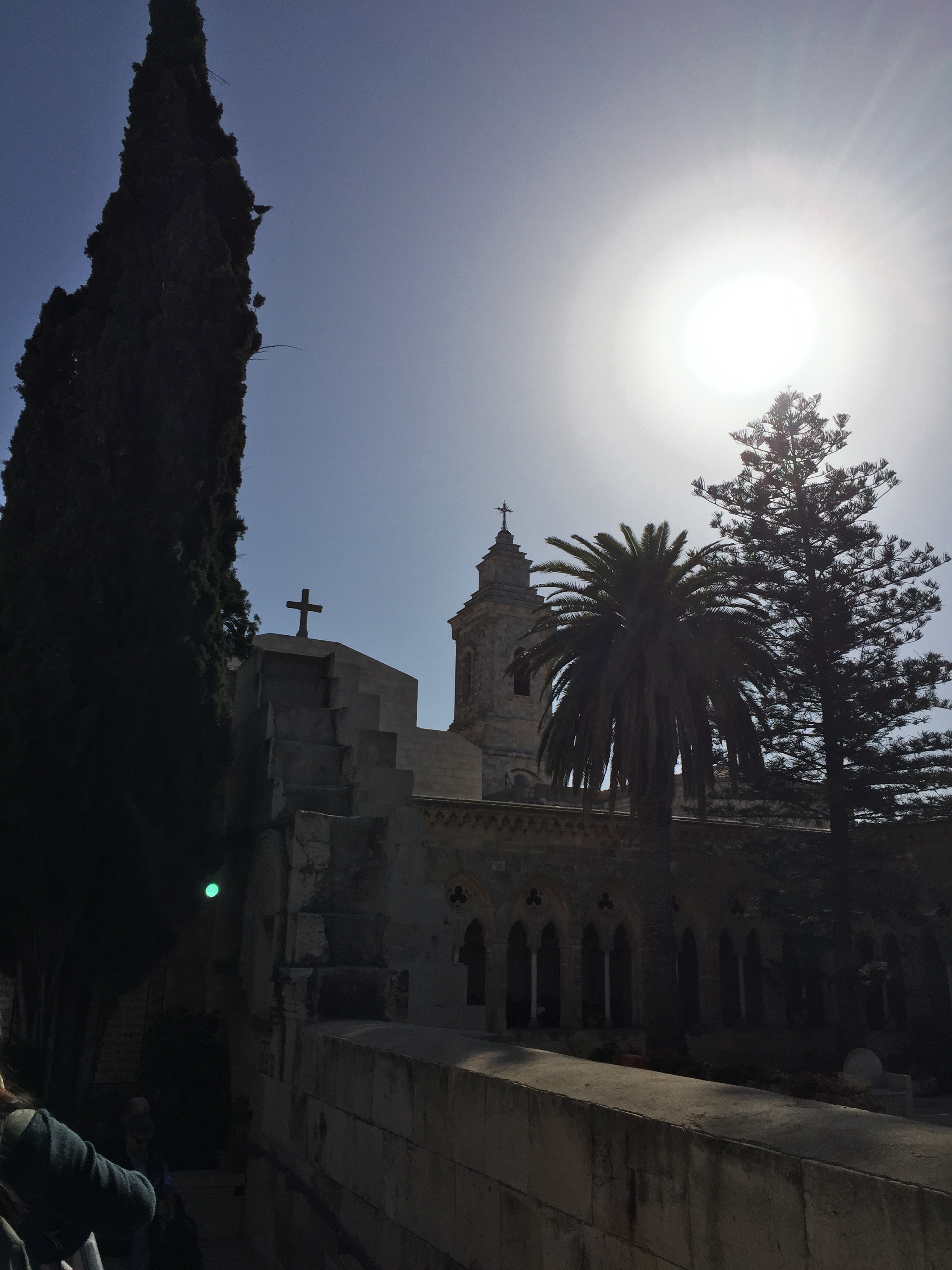
Next we stopped at the Church of Dominus Flevit, where according to Luke’s gospel Jesus wept over the city, is a lovely little church in the shape of a teardrop, built in 1955 on the site of a 7th century Byzantine Church. It has a famous window behind the altar which has motifs of chalice and thorns framing the view of the Old City.

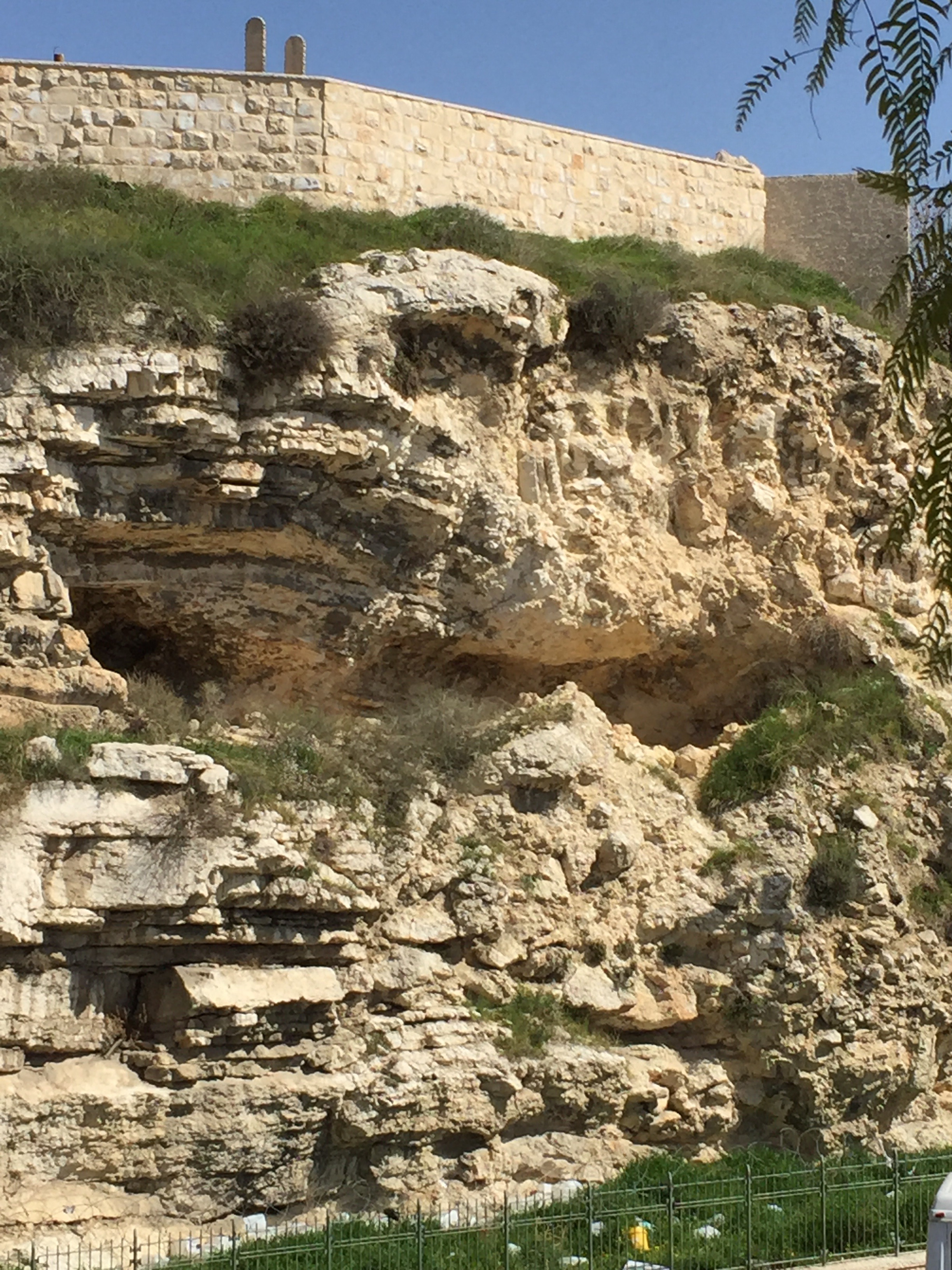
Although technically out of sequence, our next stop was the Garden Tomb (where we said mass), which has the ambience and surroundings that recreate what could have existed at the time of Jesus’ crucifixion, including a hill above it that looks like it could have been Golgotha.
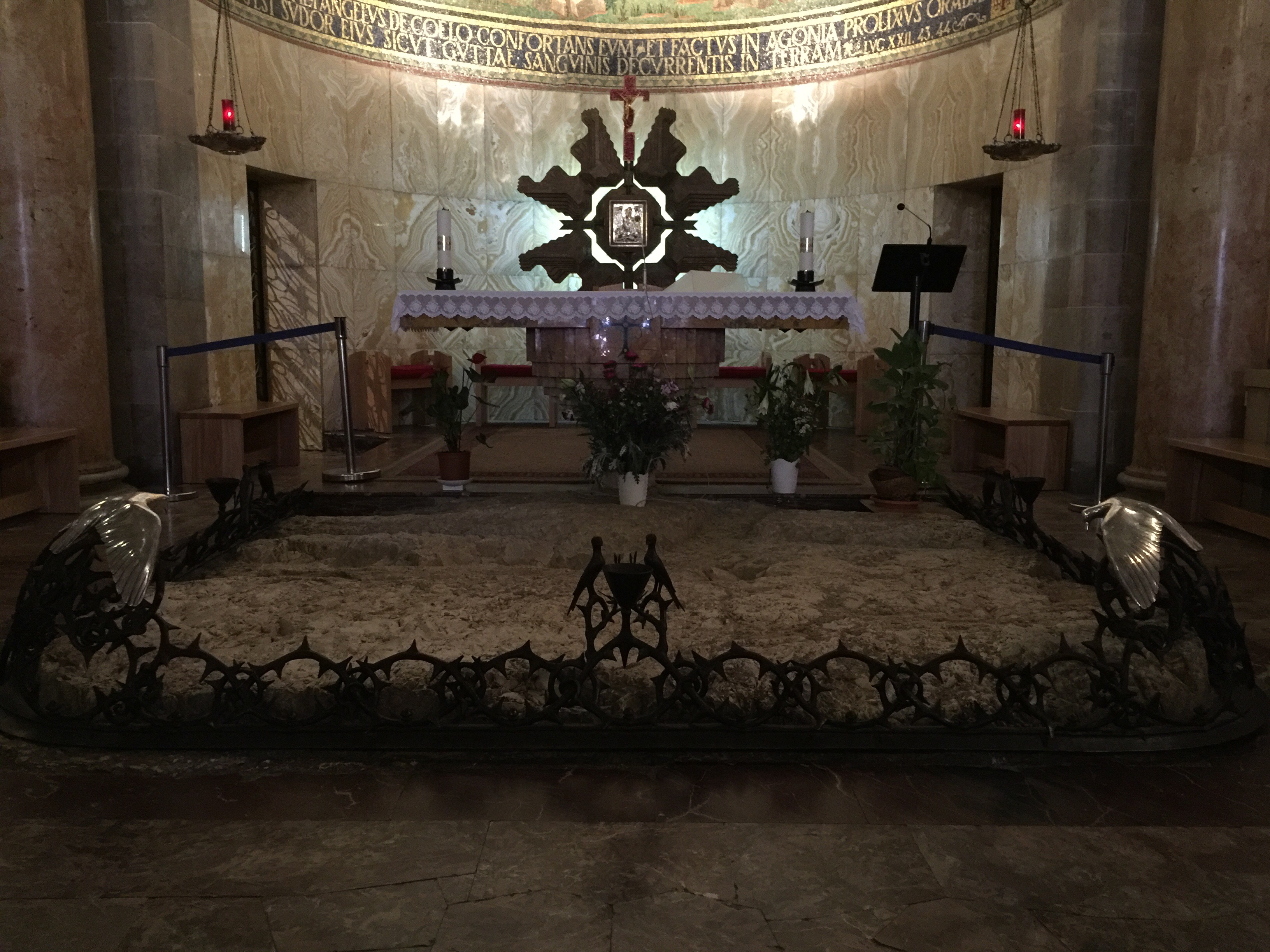
Next we visited the Garden of Gethsemane and the Church of All Nations, also known as the Church of the Agony. The garden contains some very old olive trees. Unfortunately their trunks do not have rings so we can’t date them with precision, but they are unlikely to be old enough to have been here at the same time as Jesus (although George, our guide, claims that they are off-shoots of trees cut down by the Romans and have been carbon 14 dated to be two and a half thousand years old). Gethsemane comes from the Hebrew “Gat Shemen” which means “olive press”. Inside the church, the Rock of Agony is surrounded by a wrought iron crown of thorns.
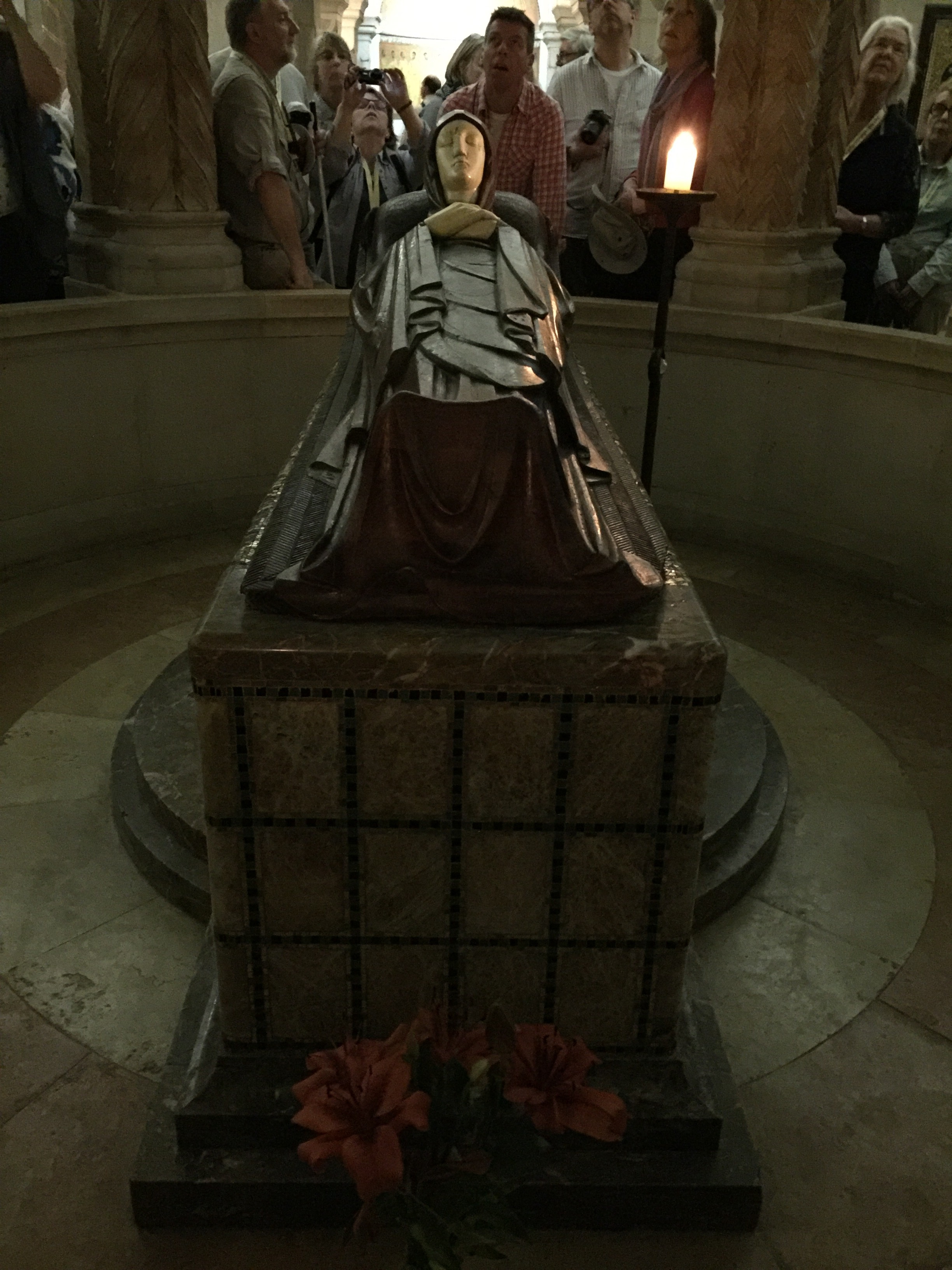
Then to Mount Zion, where we saw the reputed tomb of King David and the site of the Dormition of Our Lady, the Benedictine Dormition Abbey, the Upper Room, originally part of the Abbey, although this is not the only site that claims to be the original Upper Room; the Syrian Church of St Mark in the Old City also holds this claim.
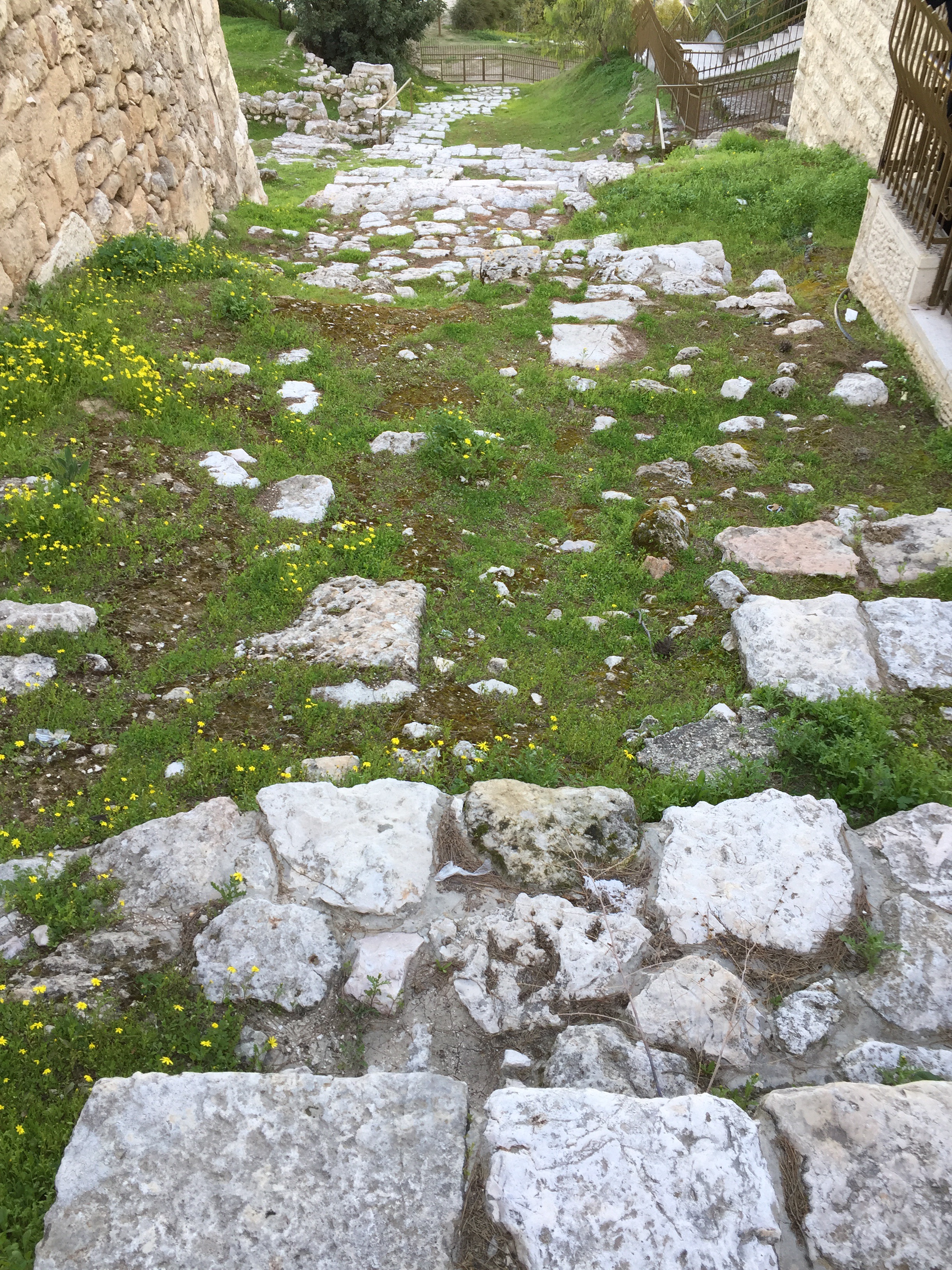
Finally, the Church of St Peter Gallicantu, built over the site of Caiaphas’ House, also known as the Church of the Cock Crowing. Excavations have uncovered prisons below, possibly where Jesus was held. Being in the same dungeon in which Jesus was held and walking on the very stones on which he walked on what we now call Good Friday is indeed a humbling preparation for Lent.
 iangraydon