Holy Land Day 3 – Wednesday

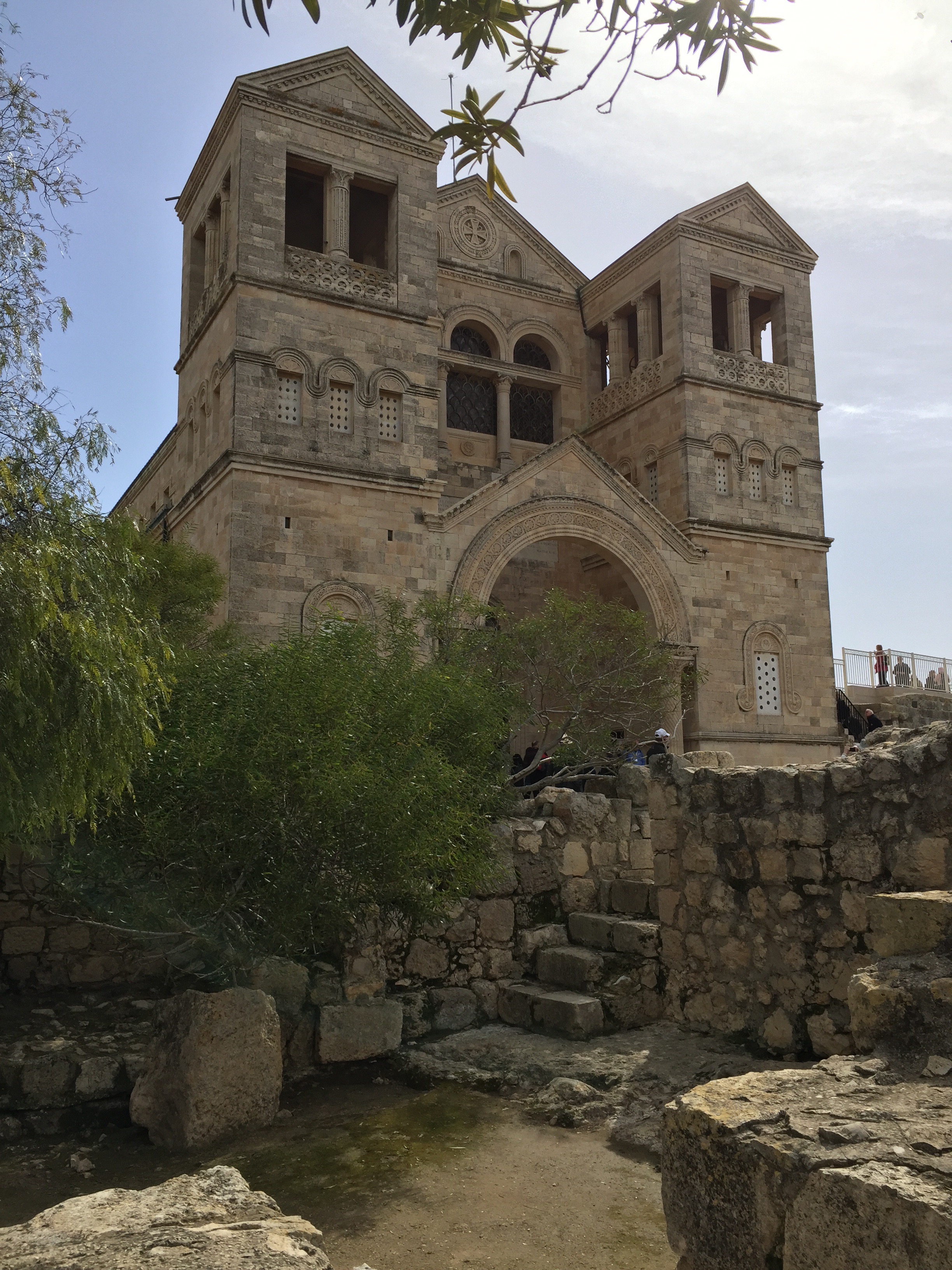
Mount Tabor is the most likely location of the Trsnsfiguration, being the right distance from Capernaum. That is, at least, so long as one measures the time it took to travel between the two using the 22km a day that a donkey can manage. At the top (too tricky for our coach to reach, so we were transferred to minibuses) is a wonderful basilica. Light shines through the west end windows onto the altar on, and only on 6th August. As well as the magnificent church, the views are breathtaking.

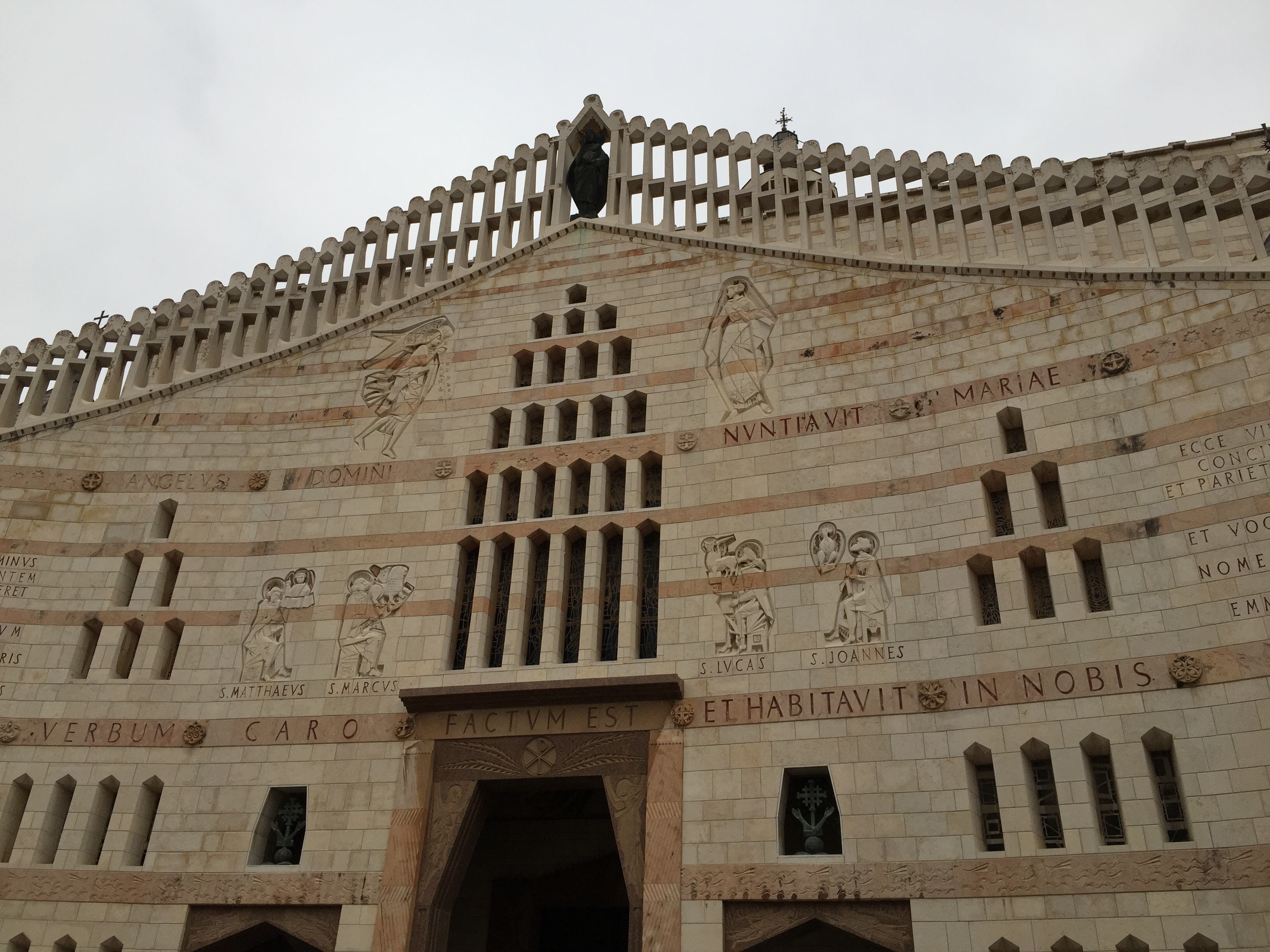
Nazareth, the home of Mary, the site of the annunciation. The basilica was built in 1960 over what was believed to be the site of Mary’s house; some ruins of ancient Nazareth are still visible underneath it.
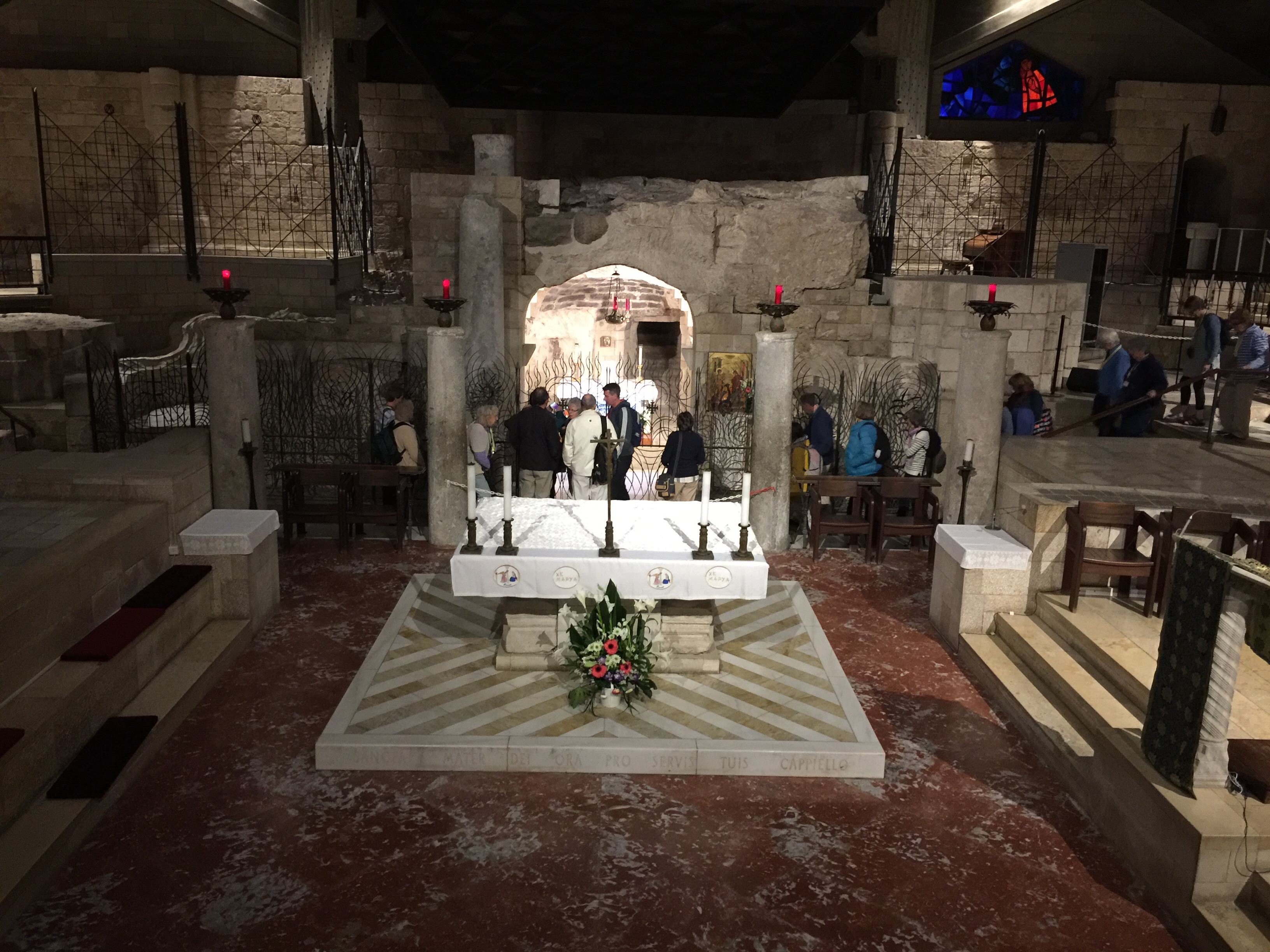

Joseph “the worker” who could have been a stonemason as well as a carpenter had a workshop here, now a church dedicated to his name, with the ruins of his house and workshop in the crypt.

We also visited the well of Mary in the Orthodox Church of St Gabriel. Orthodox Christians believe that Mary had two annunciations, one at her home and one at the only town well, where women met, chatted and drew water.


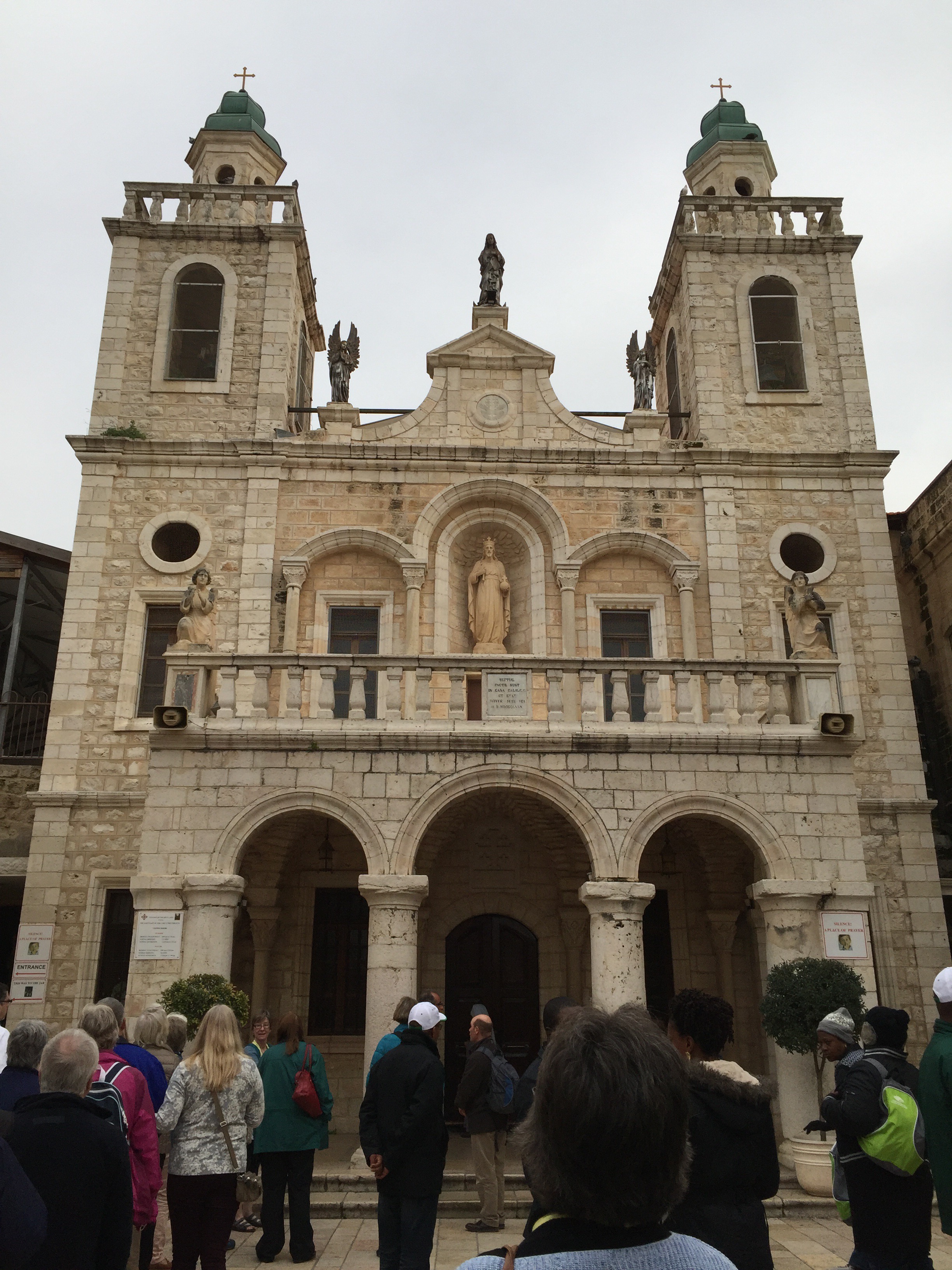
Finally for today we visited Cana of Galilee – Kafr Kanna is the most likely of many possible sites, as there is no definitive location. It would have been close to Nazareth and the wedding attended by Jesus and his disciples at it seemed that Mary, his mother, could have been related to the wedding couple as she seemed involved in the wedding feast arrangements. Our guide, George says that Jesus turned water into red wine, because Jews drink only red wine at weddings; Bishop Graham is not as convinced as he believes this to be a later tradition. In the church at Cana today, wedding vows were being renewed. We went down to see the Byzantine ruins and even further down to see the Crusader church foundations.
Holy Land Day 2 – Tuesday

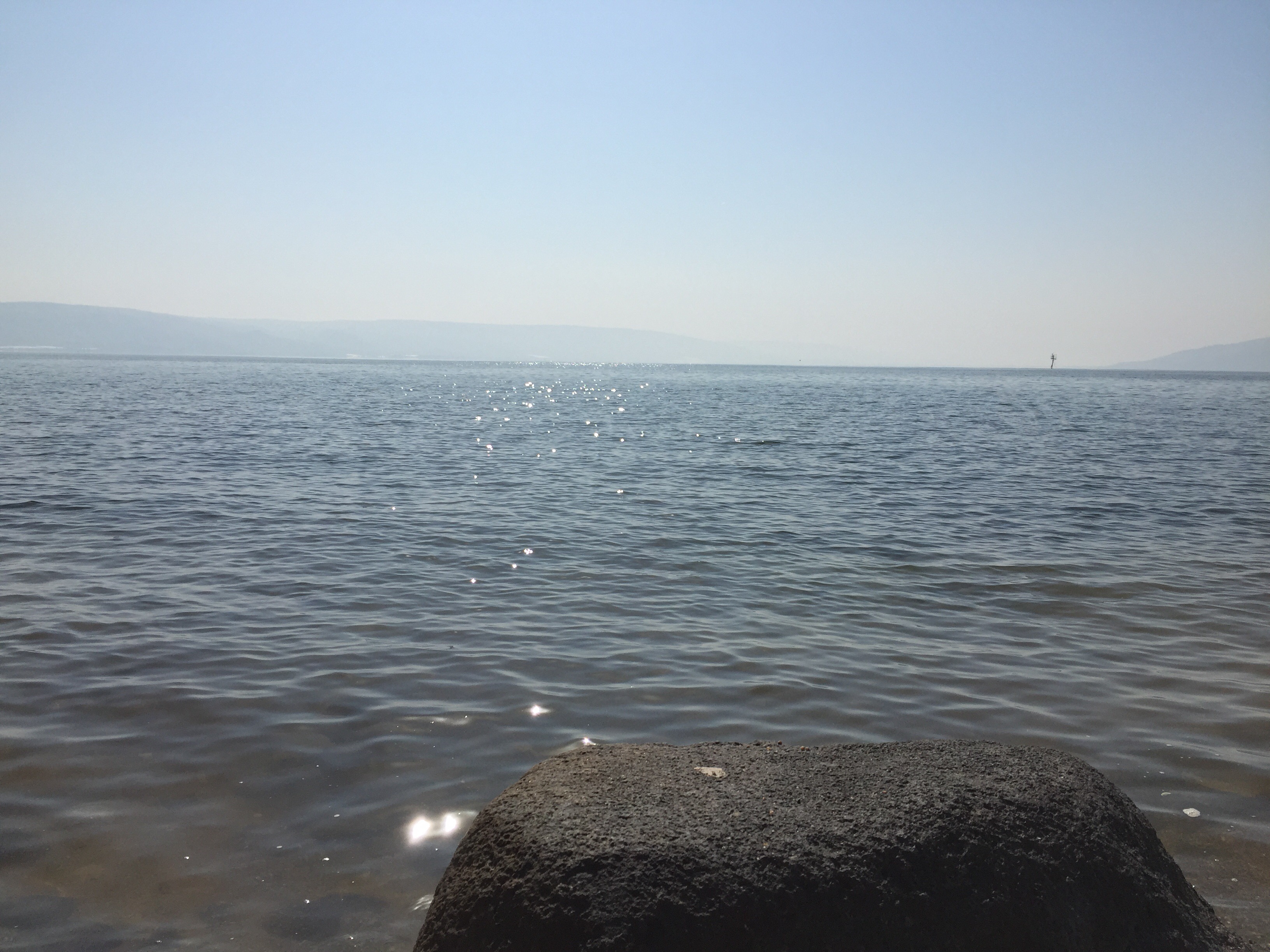
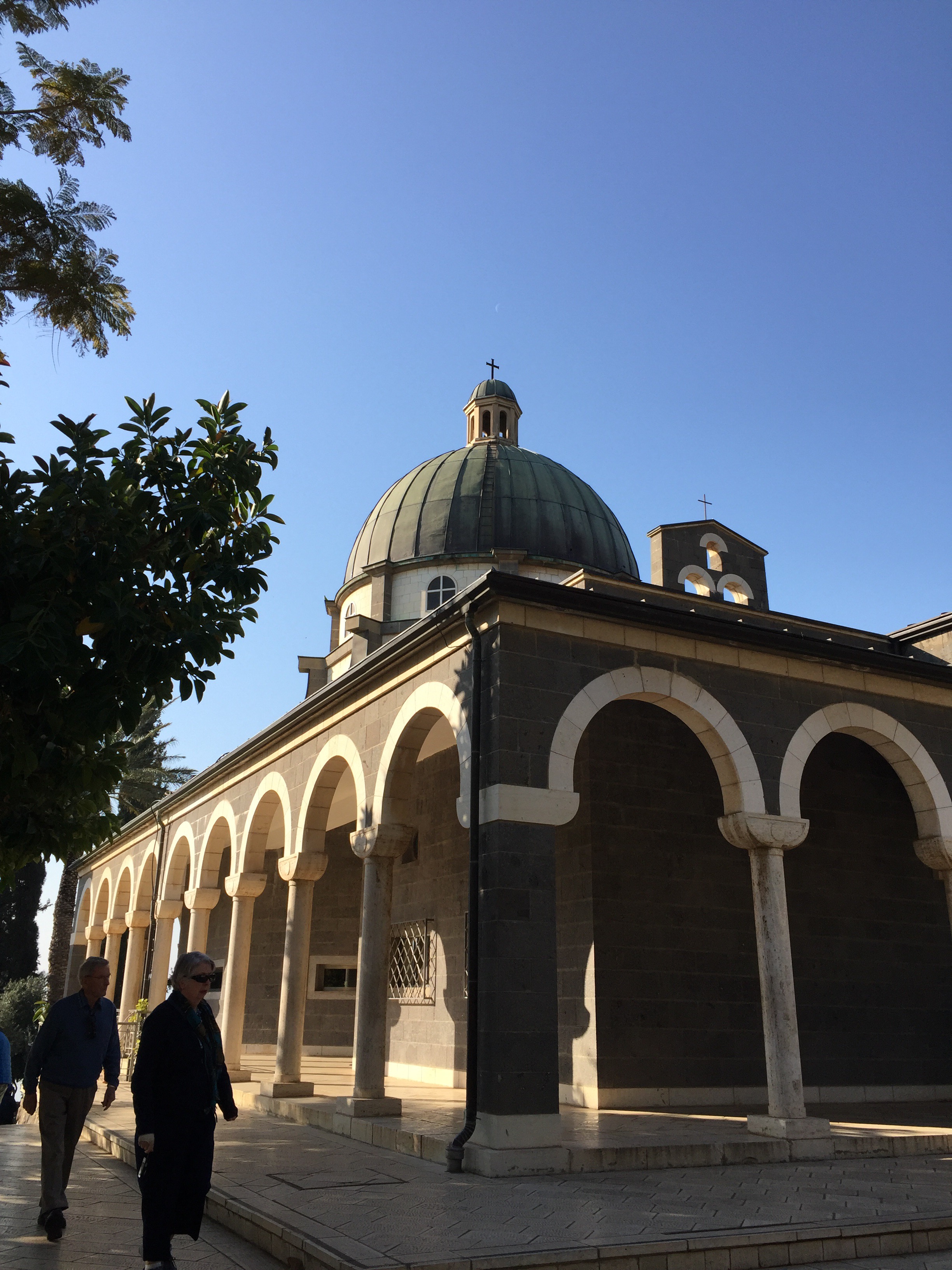
After an early breakfast, we left the hotel at 08:00, travelling first to the Mount of Beatitudes. Very peaceful, with lovely gardens for meditating in. A domed church sits at the top of the mountain, looking out over a gloriously sunny Sea of Galilee.


Next to Peter’s Primacy, where we said mass before going down to the shore where Jesus cooked fish for his disciples.


After that, we enjoyed boat ride on the sea, with a Union Jack raised as we sang the National Anthem. We were also taught Israeli dancing on board. We could look back and see the Mount of Beatitudes properly, its shape making sense of it being chosen as the location for the sermon Jesus gave there.

Our next stop was Heptapegon, the Church of the Multiplication, which was the site of the feeding of the 5,000, also known as the miracle of the loaves and fishes. This is in an area called Tabgha, the area in which Jesus performed many miracles.


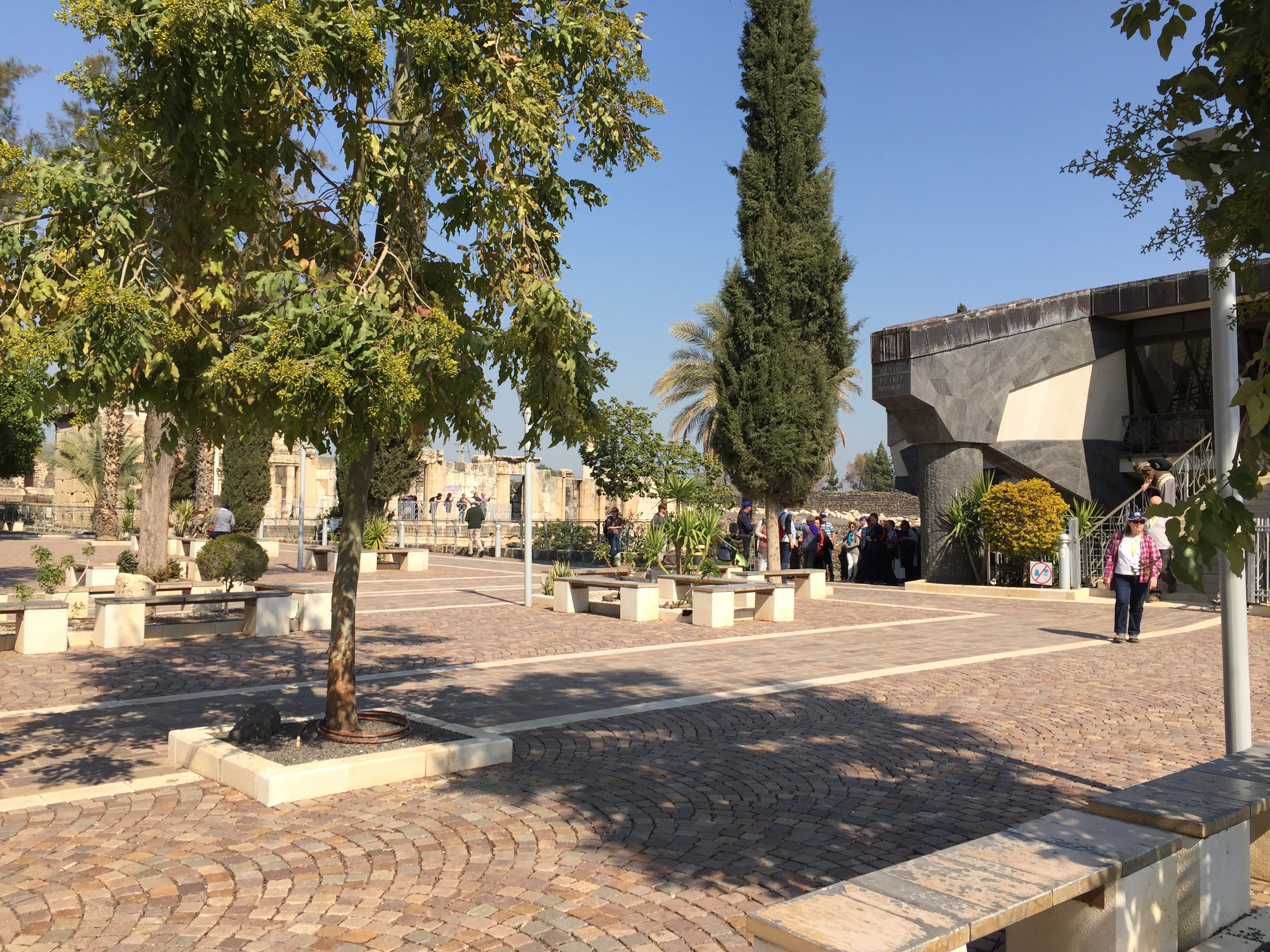
We visited Capernaum next, where Jesus stayed with Peter, James and John, preaching in the synagogue and healing Peter’s Mother in Law. The size of Peter’s house makes it clear that although he was a fisherman, he had been quite wealthy.


Lunch was fish and chips, Israeli style!

After lunch we travelled to Caesarea Phillipi to the spot where Simon acknowledged Jesus as “my Lord and my God” in return to which Jesus declared Simon to be Peter, the rock on which he would build his church. The setting of this was in what is now Banias Nature Reserve at a temple to Pan; unfortunately it was closed so instead of walking to the waterfall where three rivers converge to become the River Jordan, we got an alternative – a panoramic view over into Lebanon and Mount Hermon.

Holy Land Day 1 – Monday

After an early start, leaving the Rectory at 05:30 we were amazed to arrive at Luton by 07:35, easily in time to meet up with the rest of the pilgrimage party for our 11:40 flight. 

The flight, full of Orthodox Jews with their children, was delayed due to some passengers who had not booked seats near each other insisting that they were seated together. Easy Jet staff managed to deal with them; even the pilot got involved at one stage! Eventually we set off at 12:15.

Arriving in Tel Aviv we were taken to our hotel in Tiberias, the Restal Hotel, arriving at 22:00 local time where we had a well deserved meal together.

Orvieto

Our last day in Italy was spent travelling from Assisi to Orvieto and from there to the airport at Rome, flying back to Heathrow and onward travel. From this description it could have been a dull day and disappointing to be leaving Italy after such a fabulous week.

Disappointing to leave Italy, yes. Dull, no. Why? Orvieto, of course. Although we saw little of the city itself, arriving by coach, taking a funicular railway up the steep rock and a bus journey through the narrow streets what we did see on arriving in the piazza at the top was a monumental and beautiful cathedral.

Untitled//embedr.flickr.com/assets/client-code.js

The stripes in the walls were formed by using alternating layers of travertine and basalt, both local volcanic rocks. The interior was, until the late 19th century, richly decorated and covered in frescoes. Some of the frescoes survive – the ones by Luca Signorelli, including his Last Judgement. Michelangelo was known to have visited often and the influence of Signorelli’s work is seen clearly in his masterpieces in the Sistine Chapel; the body shapes and musculature are all clearly adopted and used.

Untitled//embedr.flickr.com/assets/client-code.js

The other thing that the cathedral is famous for is the Corporal of Bolsena, dating from 1263 when, during a mass at Bolsena a consecrated host miraculously began to bleed onto a corporal, the cloth that is used to cover the host and chalice during the service.

Untitled//embedr.flickr.com/assets/client-code.js

Our visit would not be complete without our own mass, held in the crypt.

Untitled//embedr.flickr.com/assets/client-code.js

Assisi

Waking in Assisi we had a wonderful view across the valley from our balcony, with swifts (soon to arrive back home) flying around.
Untitled//embedr.flickr.com/assets/client-code.js
The day began with a trip to the Basilica of St Francis, a glorious building built when St Francis was canonised, a mere 18 months after he had died. Since St Francis had responded to the call of Jesus from the cross in the church of St Damiano to reform his church and to bring Christianity back to its humble roots, the Friars had not wanted such a building, however the Pope agreed with the people and a wonderful church was therefore built. The inside has two levels, a gloriously richly decorated lower level, with the upper church containing frescos by Giotto. The upper level shows signs of wear and tear with signs of the earthquake of 1997 (if one knows where to look for it) wonderfully re-built in time for the millennium. Our tour of Assisi took in three further churches, two closely associated with the story of St Francis; in addition some of us visited the cathedral in Assisi.

The Monastery of St Damiano was the obvious next place to visit. Here the story gets complicated! The famous cross of St Damiano from which St Francis heard Jesus talk to him is no longer in the church of St Damiano (although there are replicas in all of the main churches in Assisi).  St Damiano became the home of the Order of the Poor Claires and (perhaps ironically) the Basilica of St Claire became the home of the original cross of St Damiano. The bones of St Claire are now in the Basilica of St Claire, although the body is preserved thanks to the help of Madame Tussauds, so you can imagine what this looks like. In fact, you will have to, since most of the churches in Assisi did not permit any internal photography. The other church in the area that we visited was the Papal Basilica of Saint Mary of the Angels in Assisi. It was here that the young Francis of Assisi understood his vocation and renounced the world in order to live in poverty among the poor and thus started the Franciscan movement.

So the chronology of these four churches is as follows: Francis was baptised in the Cathedral (St Rufino), received his first communion in the Basilica of St Clare, heard the call of Jesus in the church of St Damiano, understood his calling in St Mary di Angelo and finally, after his death and canonisation, the Basilica to St Francis was built. I have therefore put the pictures in this order, not the order in which we visited them.
Untitled//embedr.flickr.com/assets/client-code.js
 //embedr.flickr.com/assets/client-code.js

Rome – Day 6

Today we say goodbye to Rome and hello to Assisi.

We began the day with a visit to San Maria del Populo, where two further famous Caravaggios decorate a small chapel, the Conversion of St Paul and Crucifixion of St Peter.  Both paintings demonstrate how Caravaggio uses light and dark to great effect, perspective and positioning of people and animals as well as drawing the viewer inescapably to the faces of the key figures.  In addition to these paintings the church is the location of the famous Chigi Chapel.
Untitled//embedr.flickr.com/assets/client-code.js

Next we moved to the oldest part of the city, with a choice of The Basilica di Santa Maria in Cosmedin or the Basilica di San Georgio al Velabro.  The former is a pretty church with a tall bell tower, but is probably more famous for the “Mouth of Truth”, a face carved in marble said to eat the hands of liars featured in the film Roman Holiday, where Cary Grant put his hand into the mouth and pulled his arm out with his hand concealed in his sleeve.  Since his co-star did not know he was going to do that, the reaction from Audrey Hepburn was of genuine surprise and shock! The other church used to be dedicated to both St George and St Sebastian.  It contains relics of our patron saint, St George, in a reliquary set in the altar.  It is a simple church, also containing a memorial to Cardinal John Henry Newman.
Untitled//embedr.flickr.com/assets/client-code.js

From here we walked to The Anglican Centre, an Anglican Presence in Rome, where we celebrated Mass following which they provided lunch (including Prosecco!).
Untitled//embedr.flickr.com/assets/client-code.js
Returning to the coach, we set off, finally saying arrivederci Roma, salve Assisi.

Rome – Day 5

Today our party divided for the morning, so after a very early start (leaving the hotel at 07:30) whilst some attended the General Assembly with the Pope, the rest of us visited the Vatican Museums, culminating of course with a visit to the Sisteen Chapel.  As a first time visitor to Rome, this was simply a “must see” experience and it did not let me down.  Even with the build up through the corridors and rooms full of art and sculpture, including the Raphael rooms, on entering the Sisteen Chapel, no matter how full of people, it immediately registers as something special.  Whilst through most of the museum photography is permitted (although without flash), because the Sistine Chapel has been recently restored, the sponsors of this do not permit it here.

Untitled//embedr.flickr.com/assets/client-code.js

Untitled//embedr.flickr.com/assets/client-code.js

Untitled//embedr.flickr.com/assets/client-code.js

Wandering back through Rome to the Borgo Pio, we enjoyed a relaxing lunch (pizza – we can now compare pizzas with those served in Rome) and had a brief unscheduled visit to the church of St Spirito in Sassia before joining the rest of our party for the afternoon.

Untitled//embedr.flickr.com/assets/client-code.js

We next visited the Catacomb of Callixtus where an underground tour of the catacombs was followed by mass.

Untitled//embedr.flickr.com/assets/client-code.js

Catacomb of Callixtus//embedr.flickr.com/assets/client-code.js

Finally for the day we visited the church of St Gregory at the Monastery of St Andrew and Gregory.  This was the Gregory who became pope and sent Augustine to us to become the founder of our church and effectively become the first Archbishop of Canterbury, so we prayed there for Francis and Justin their two respective successors, in front of a painting of St Gregory and by the stone chair in which he used to contemplate.

 //embedr.flickr.com/assets/client-code.js

Rome – Day 4

Today was a story of three halves.

In the morning we travelled out to Ostia Antica, the old port of Rome which is not only now silted up but the path of the River Tiber which was so important has changed its course and now does not run as close to the old town as it used to.  Until recently (well, without delving into history books I believe the early part of the 20th century) almost all of the ruins were covered.  Now they have been excavated, forming a massive set of remains of an old Roman town.

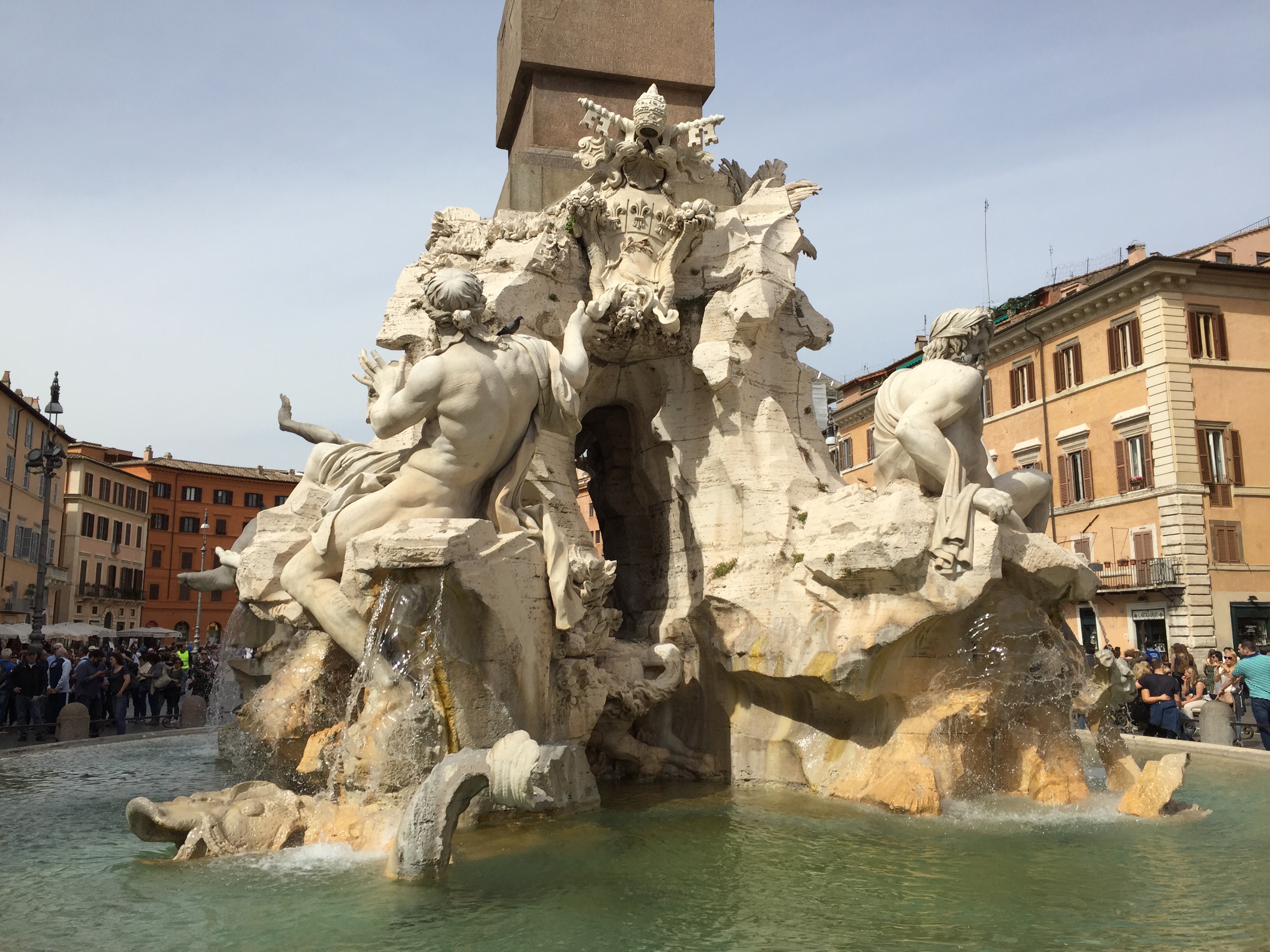
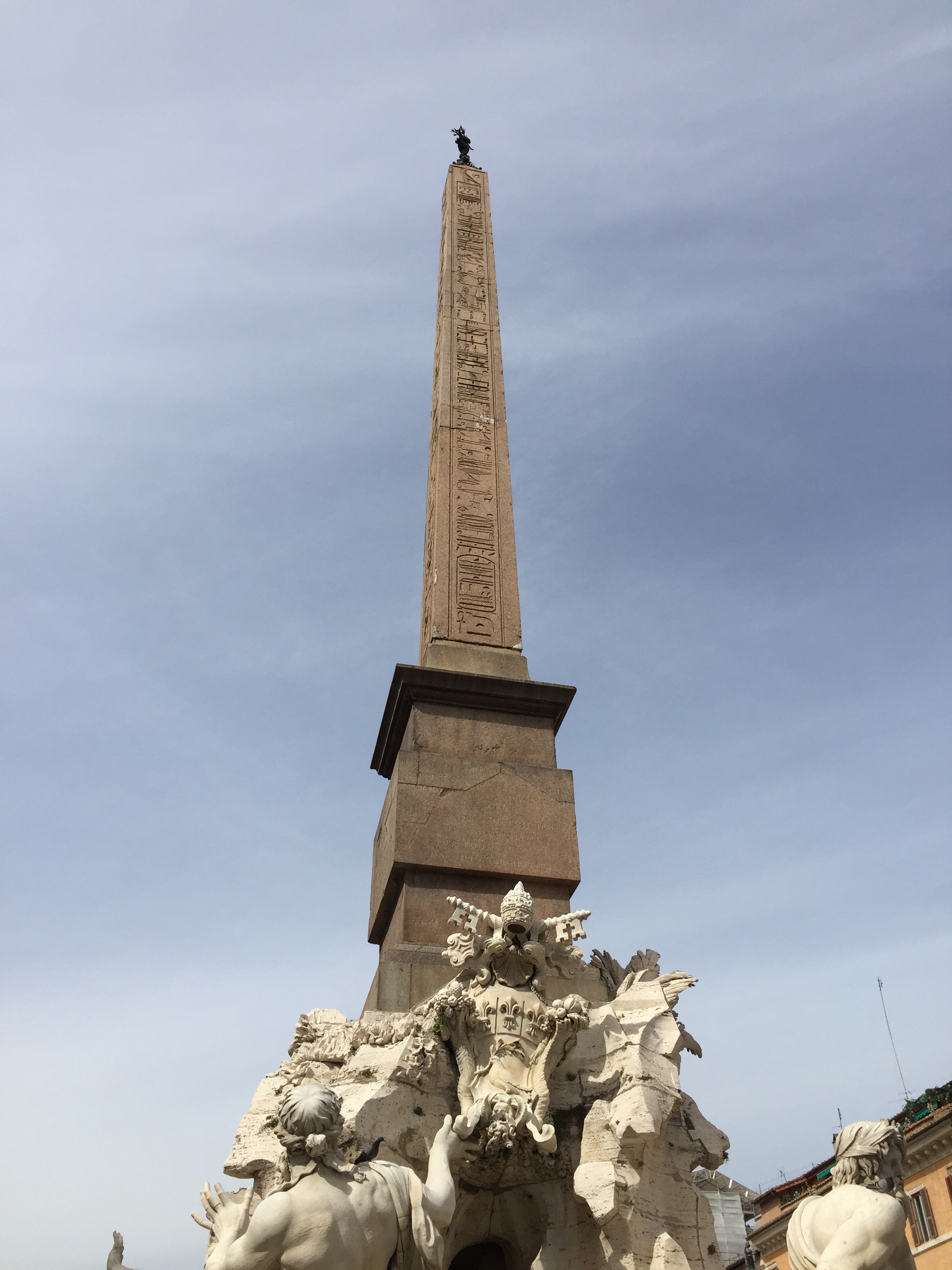
We finished out tour with Mass before having lunch and returning to Rome, where we first went to see the Piazza Navona, where there are three famous fountains; the Fountain of the Four Rivers, sculpted by Bernini, is the centre-piece.


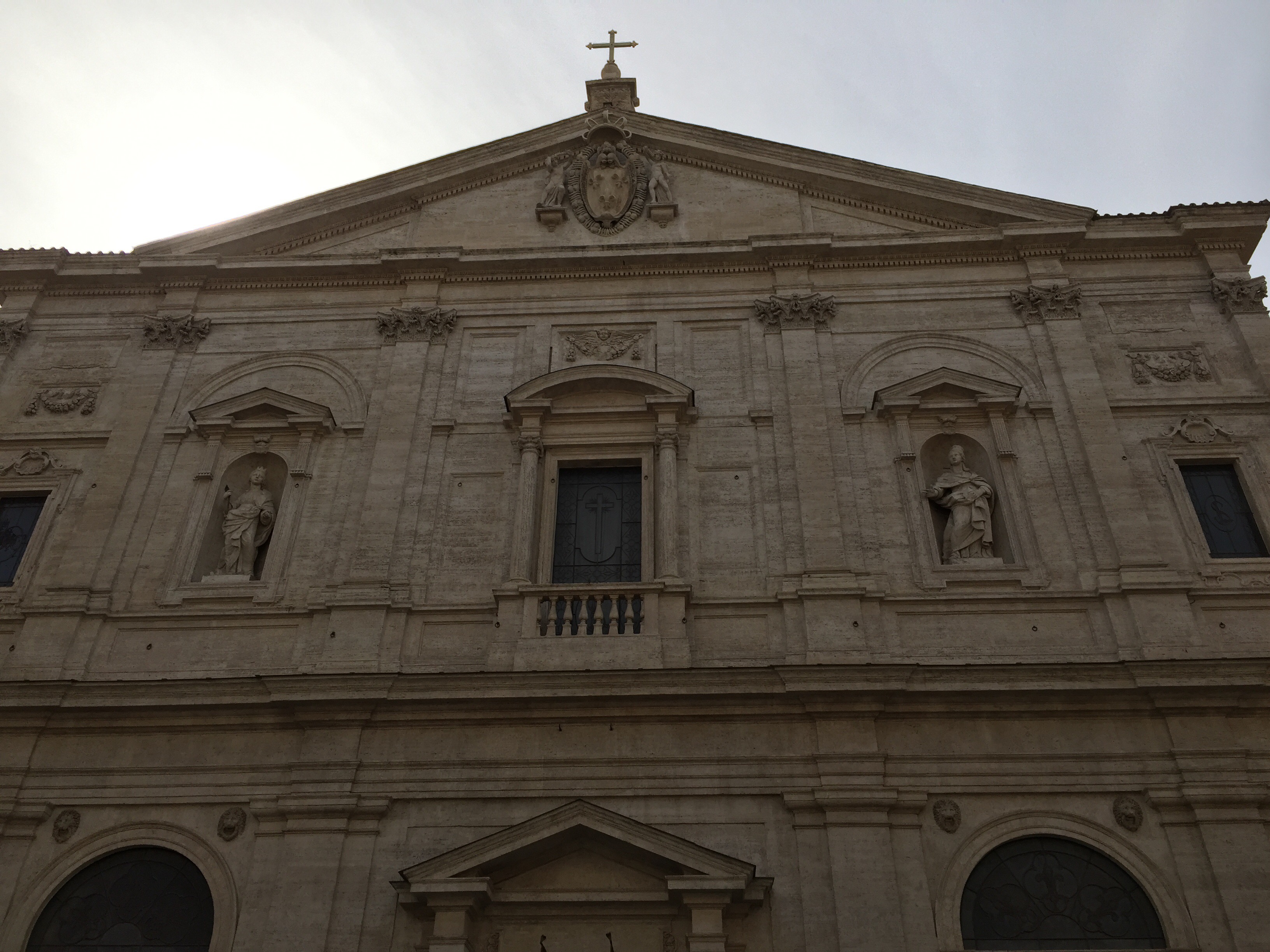
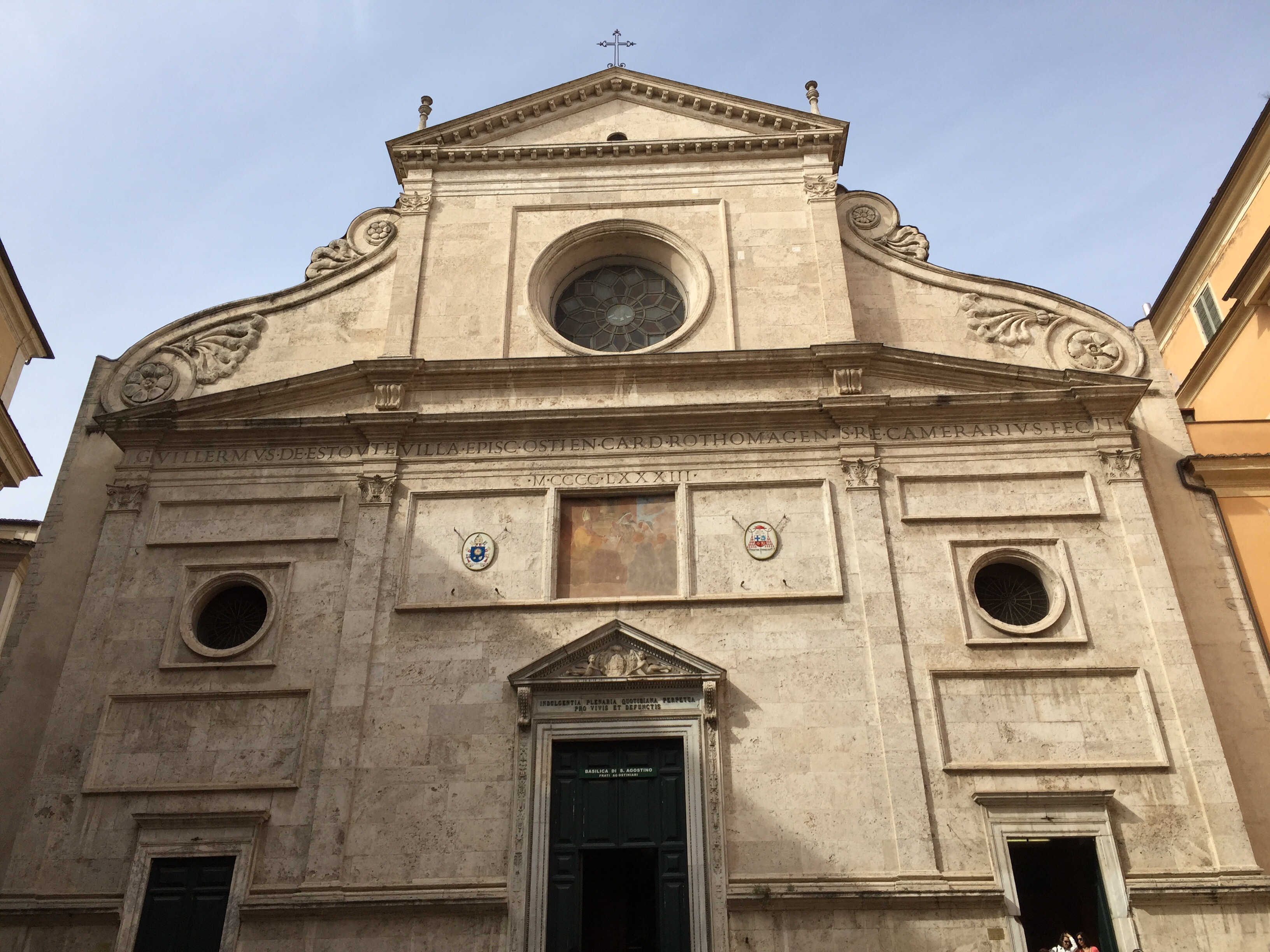
Next Caravaggio, with paintings in the churches of San Luigi Dei Francesi and then the Basilica of St Augustine.


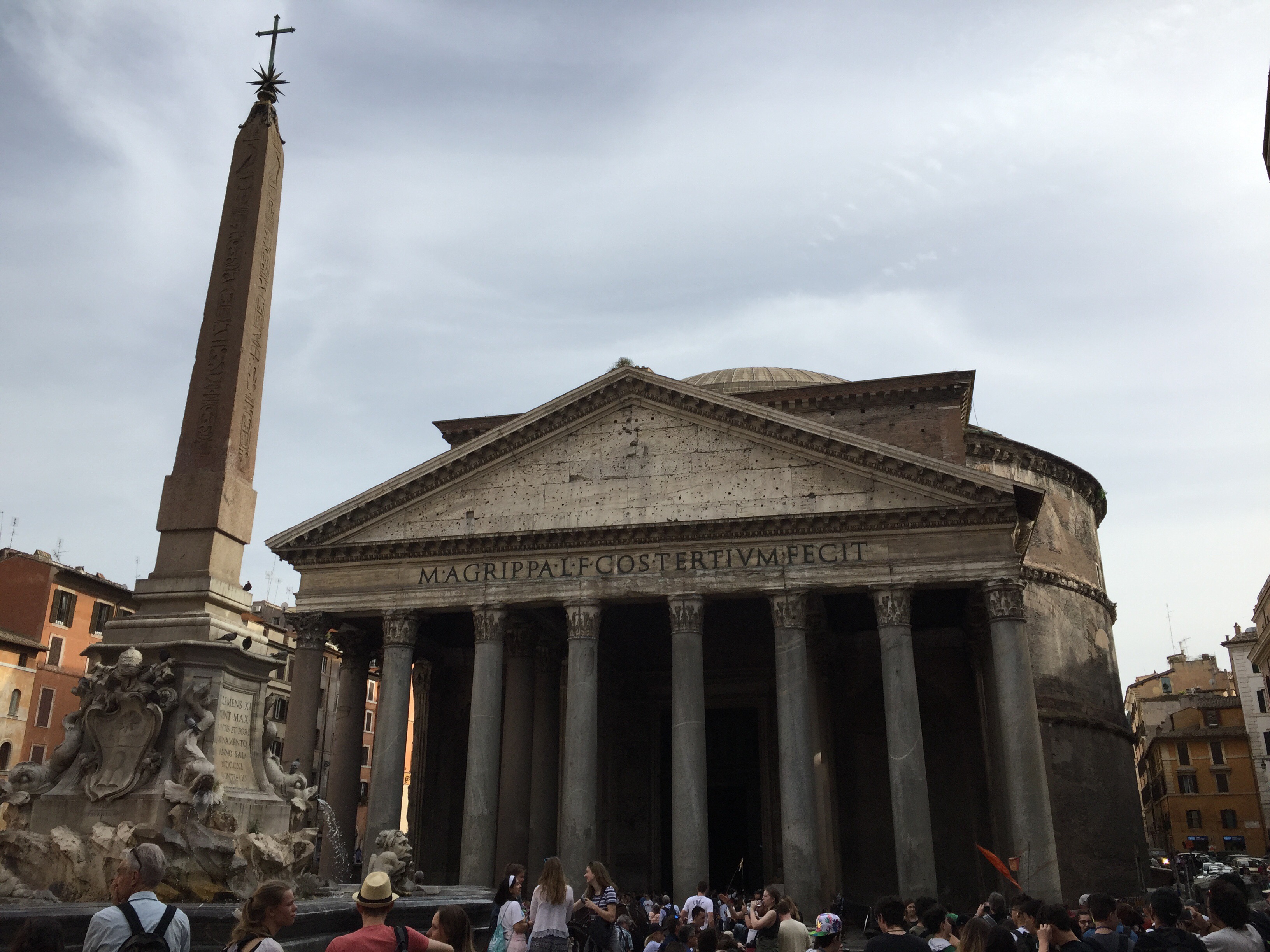
Finally we visited the Pantheon, which is impressive at many levels.  Built in the second century, it is a marvel of engineering; the open oculus being the only light in the building shows how efficient this design is; finally, with the tombs of Raphael Santi amongst others, this is a special place.


We are going out for a meal tonight, so I must finish here for now.  Ciao!

Rome – Day 3

Today we visited four churches and two of the classical classics for Roman visits.  We went from the massive and spectacular to the ornate and compact, we went underground or the first time this holiday.

So first, the crowning glory of Rome, we went back to St Peter’s Basilica and today we had a guided tour inside the Greek cross designed church; a church overflowing with the history of the papacy and the Roman Catholic Church, full of Christian art, both sculptures and pictures; the pictures both painted and mosaics.  To try to describe and do justice to this is impossible.  To take it all in during a one hour visit (although I really do not know how long we spent inside) is also impossible.
Untitled//embedr.flickr.com/assets/client-code.js

Untitled//embedr.flickr.com/assets/client-code.js

 //embedr.flickr.com/assets/client-code.js

From there, we walked through a car park and continued up a hill to what must be the highest point in Rome – certainly the views across the city were stunning.  This was to attend St Onofrio, a pretty church with a charming cloister.  In the church we said Mass.
Untitled//embedr.flickr.com/assets/client-code.js

Next, after lunch we visited the Basilica of St Mary the Major, yet another absolutely stunning church in the form of a temple rather than cross.  Decorated with gold and containing mosaics dating back as far as the sixth century, this is indeed a special place.
Untitled//embedr.flickr.com/assets/client-code.js

The last of our churches was that of St Clemente, where unfortunately photography was not permitted.  It again had a wonderful mosaic behind and above the altar in the traditional curved form.  Here we went underground to explore the church on the previous level and the ancient temple that formed the level below that; originally this lowest level was ground level.  It has successively been filled in, built on, excavated and finally supported, losing the upper portion of wall paintings depicting scenes from some lesser known saints (at least to me – look up St Alex as an example). The images below are from their website.

San Clemente//embedr.flickr.com/assets/client-code.js
St Clemente//embedr.flickr.com/assets/client-code.js

Classical Rome consisted of the Coliseum, which we walked around rather than going inside, followed by a walk down the road to the Roman Forum.
Untitled//embedr.flickr.com/assets/client-code.js

Untitled//embedr.flickr.com/assets/client-code.js
We walked over 10km today, so I will stop writing here!

Rome – Day 2

Amongst other things, the Rome Marathon being run today caused some small changes to our plans, although in reality I think that we started noticing a contention between our tour guide’s love of history and our party’s Bishop’s love of the divine.

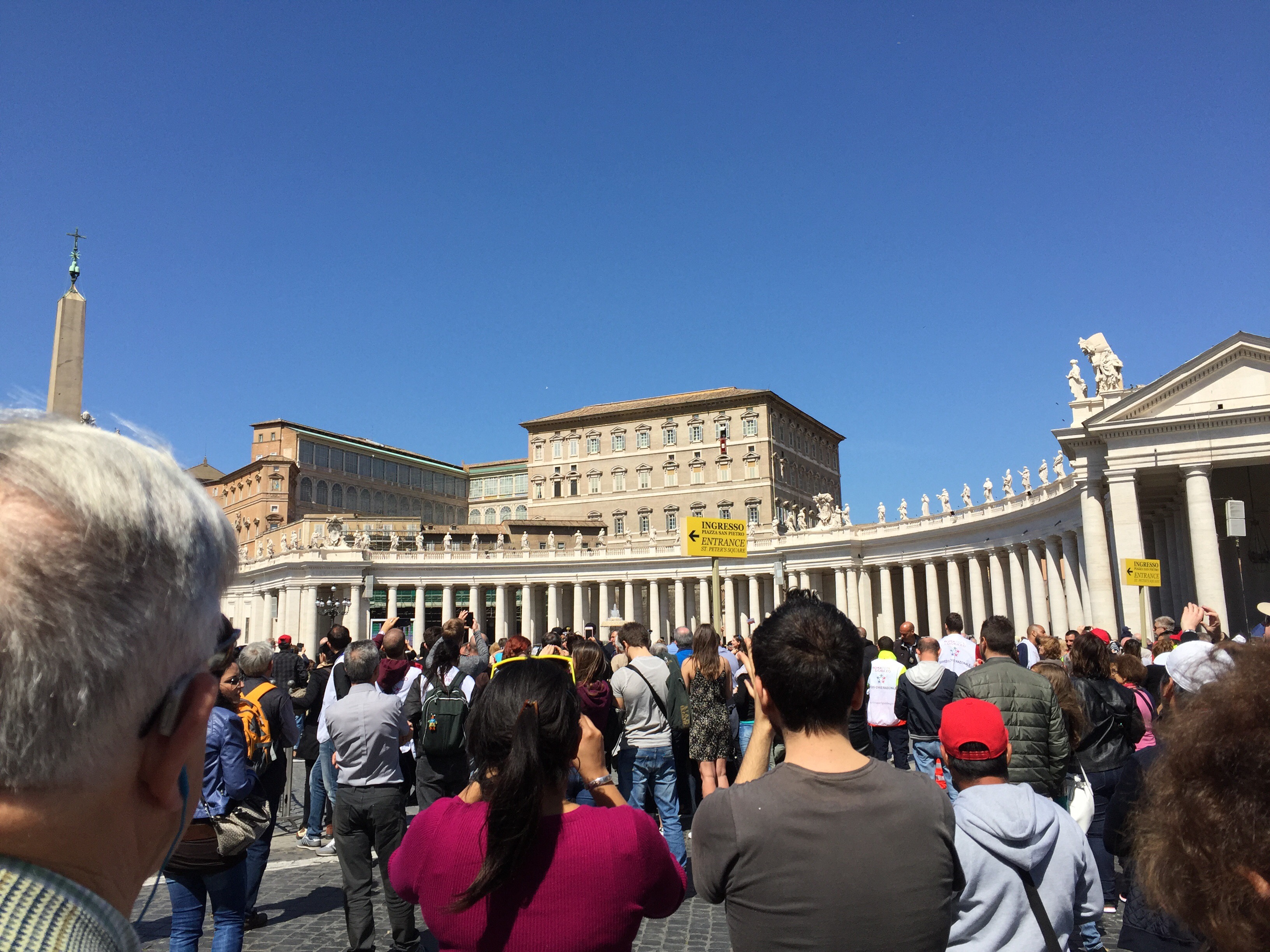
Highlights of the day included seeing (at a distance) and hearing the Pope saying the Angelus in the Piazza outside St Peter’s Basilica.  Top row, second window from the right, if you look hard!


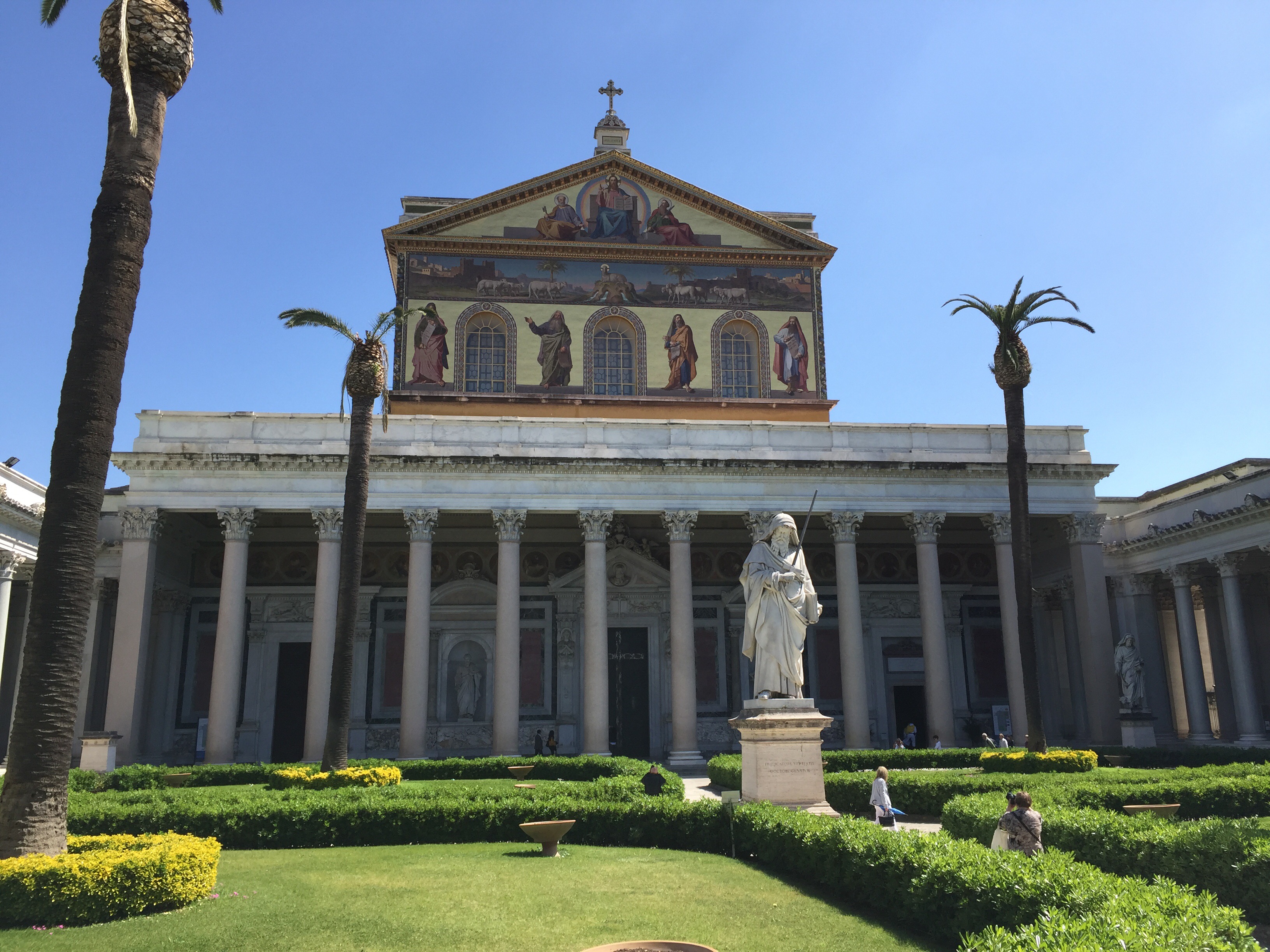
We next visited St Paul’s outside the Walls, where as well as our tour we said mass.


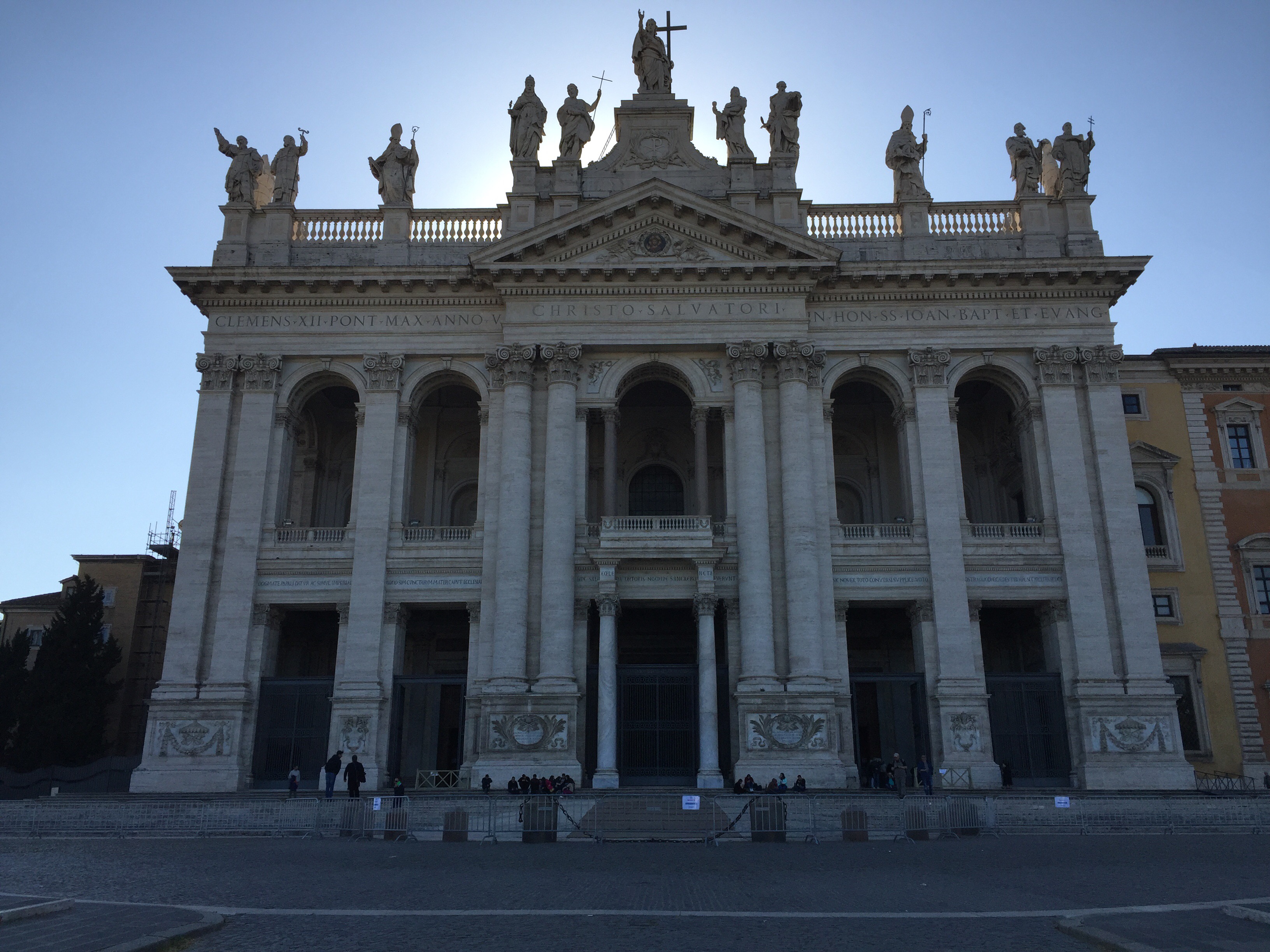
Finally, we ended up at St John Lateran, where due to the time that we arrived, a Sunday evening Mass prevented us from having a full tour.